The TSMR Armor is the kind of IEM that practically invites a lazy reading. Dual dynamic drivers, a pair of Knowles balanced armatures, an electret high-frequency driver, three tuning switches, and a name like Armor all point in the same direction: big sound, big bass, big attitude. If you stop there, you will probably assume this is another specialty set built to flatten nuance in exchange for impact. The real story is slightly more interesting than that.
The Armor is unapologetically low-end friendly, but it is not a blunt instrument. What Tansio Mirai has built here is a warm, bass-forward tribrid that still cares about body, staging, and long-session listenability. That makes the right audience fairly clear: this is for listeners who want physicality and fullness first, but do not want the rest of the spectrum to disappear just because the bass has shown up.
The angle: this is a bass-first IEM, but not a one-note one
That distinction matters because the under-$300 IEM market is full of products that confuse excess with personality. The Armor does have a clear identity, and yes, that identity starts with bass. Official materials describe a 2DD plus 2BA plus 1 electret configuration with low-frequency tuning switches, and the result is warm, weighty, and highly configurable. But the point is not simply that it is bassy. The bass is the hook, while the overall presentation stays smoother, more spacious, and more coherent than a lot of hard-selling bass sets manage.
That makes the Armor easier to frame honestly. It is not the set to buy if your priority is the last word in edge definition, microscope-level detail retrieval, or neutral-reference discipline. It is the set to buy if you want music to feel dense, grounded, and physically present. The Armor is at its most convincing when it is allowed to sound full-bodied rather than hyper-analytical. In other words, this is a tuning built around enjoyment first, with technical competence asked to support the experience rather than dominate it.
Design, fit, and accessories do a good job selling the package
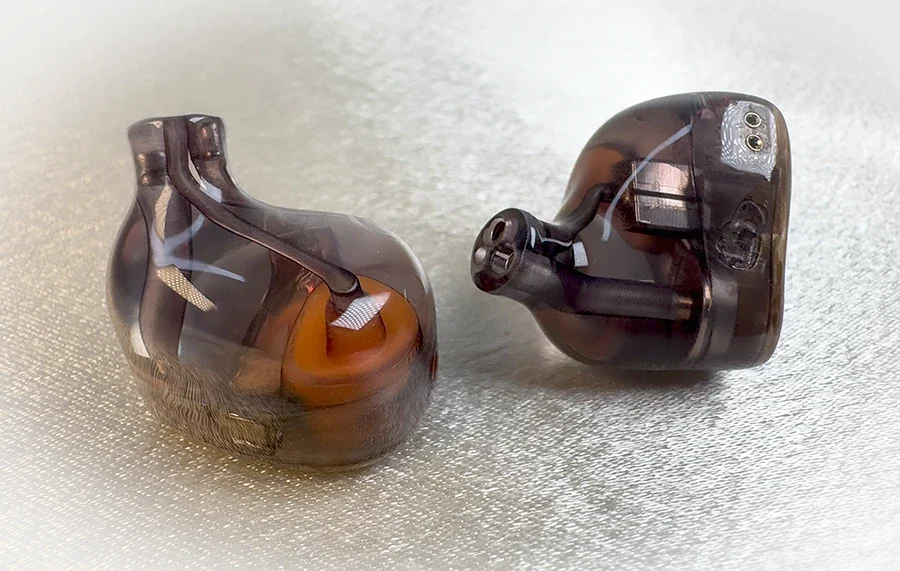
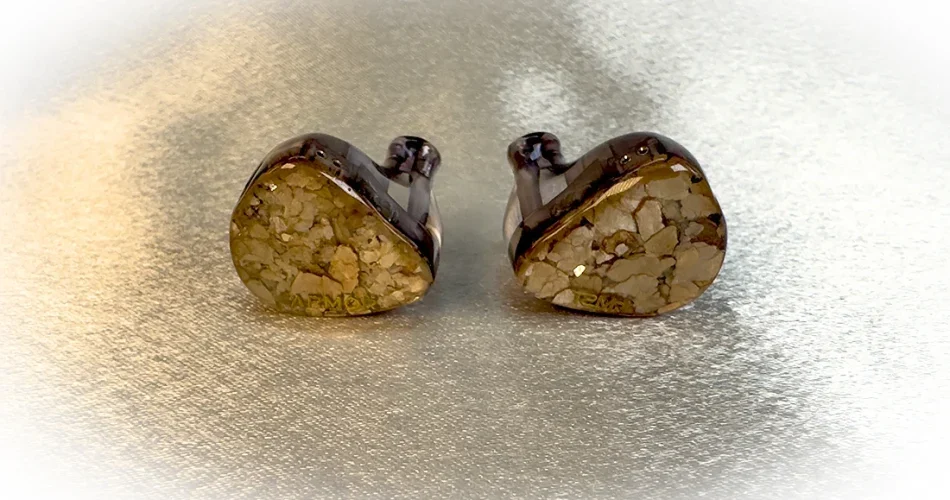
The physical design sounds and looks more upscale than generic spec-sheet competition. Official descriptions point to a high-quality 3D-printed resin cavity, manual laminated faceplates, and a transparent shell that lets some of the internal structure remain visible. The visual appeal holds up too: the Armor has a bold but polished look, not a cheap one. It feels designed to catch your eye in product shots without crossing into toy-like excess.
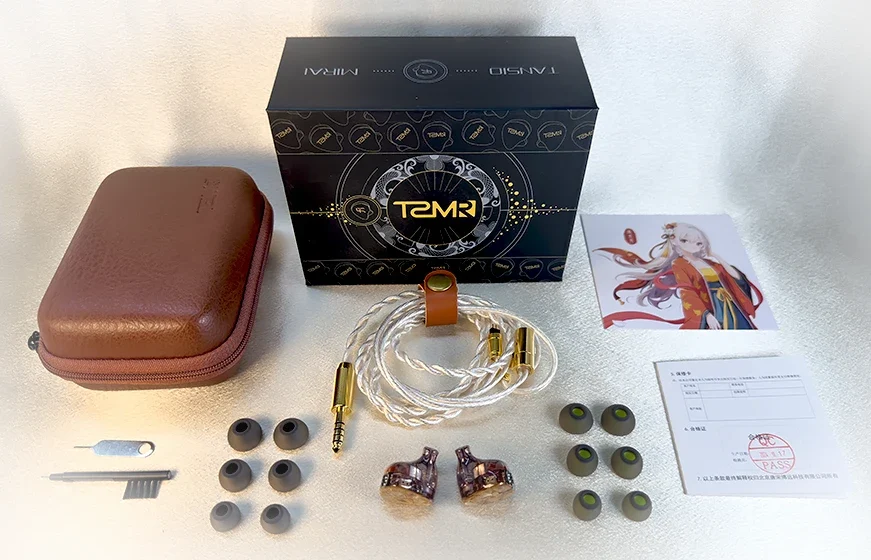
The included package is also better thought out than bare-minimum competition: a good stock silver-plated copper cable, a fairly substantial carrying case, tips, a cleaning tool, and the switch tool needed for adjustment. That does not make the Armor an accessory-first value play, but it does mean the set arrives feeling finished. Fit is more mixed, though not alarmingly so. The shells are substantial and the nozzles on the shorter side, so comfort depends on ear shape and tip choice more than with smaller, slimmer designs. Nothing here is unmanageable, but the Armor is not built around disappearing in the ear.
How the TSMR Armor sounds
The shortest useful summary is warm, bass-driven, and smoother than the name suggests. The low end is plainly the star of the show. The dual dynamic-driver bass is deep, punchy, tactile, and generously elevated, with real physicality in both sub-bass rumble and mid-bass slam. It is not just quantity: the Armor delivers bass with texture and drive instead of turning every track into a soft-edged blur. This is not a neutral low end, but it is controlled rather than careless.
The midrange benefits from that tuning philosophy more than it suffers from it. Voices and instruments are full, smooth, and well-bodied, especially male vocals and lower-midrange material. The tradeoff is predictable: compared with leaner or more reference-minded sets, the Armor does not sound maximally transparent or razor-sharp through the mids. Still, that softness is deliberate rather than accidental. It gives the Armor a more relaxed, forgiving presentation that suits long listening sessions and genre hopping better than quick A-B showmanship.
Treble is where the Armor becomes more nuanced than its basshead reputation might imply. The high end sounds smooth, extended, and relatively non-fatiguing, while still bringing enough air and definition to keep the whole tuning from turning sleepy. That does not mean this is a bright IEM. It is not. But the electret driver helps preserve a sense of openness and bite, especially with cymbals, guitars, and spatial cues. The result is a tuning that feels heavy without feeling sealed shut.
The tuning switches are not a gimmick
One of the stronger selling points here is that the switches make meaningful changes instead of offering pretend customization. Official guidance identifies 020 as the default standard tuning, 100 as an enhanced low-frequency mode, and 003 as an attenuation mode, with all switches down effectively serving as a no-bass setting rather than a serious listening preset. The main takeaway: the Armor can move from already-bassy to openly indulgent, while some switch combinations bring a cleaner or brighter balance for listeners who want less weight and more edge.
That flexibility is important because it changes the case for the product. The Armor is not simply a bass cannon for one kind of listener. It is better understood as a warm, switchable platform whose center of gravity is always musicality and note weight, but whose balance can still be nudged in useful directions. If you are the kind of listener who likes to tune an IEM to mood, source, or genre, that matters. If you prefer one locked reference target and never want to touch a switch, it matters less.
Technical performance is good enough, not the whole story
The Armor is technically respectable without being a category bully. Staging is above average in width, with a pleasing sense of depth and layering, and the presentation avoids sounding boxed in. Imaging and separation are solid rather than elite. Resolution is the main limit. The Armor is not a detail monster. That sounds right for a product whose tuning priorities are weight, warmth, and immersion rather than forensic precision.
Who should buy it, and who probably should not
The best audience for the TSMR Armor is easy to imagine. If you listen to pop, hip-hop, rock, electronic music, modern R&B, or any playlist that benefits from slam, body, and a sense of scale, the Armor makes immediate sense. It also makes sense for listeners who value smooth treble and richer note weight over strict neutrality. On the other hand, if you mainly want an airy reference monitor for classical, acoustic jazz, mixing work, or detail chasing, the Armor is probably the wrong shape of answer. Its strengths are too deliberate to pretend otherwise.
Final verdict
The TSMR Armor looks like a product designed to win attention with brute force, but the more convincing story is that it wins by knowing exactly how much force to use. Yes, it is bassy. Yes, it is aimed at listeners who want more physical engagement than neutral sets can provide. But the real appeal is that it stops short of sounding crude. Between the useful switch system, the substantial low-end performance, the smooth treble tuning, and the generally grown-up sense of cohesion, the Armor comes across less like a gimmick and more like a confident specialty tuning done properly. It will not be for everyone, but for the right listener it is one of the more persuasive fun-first IEMs in its price class.
Sources
Specs from TSMR's official materials.