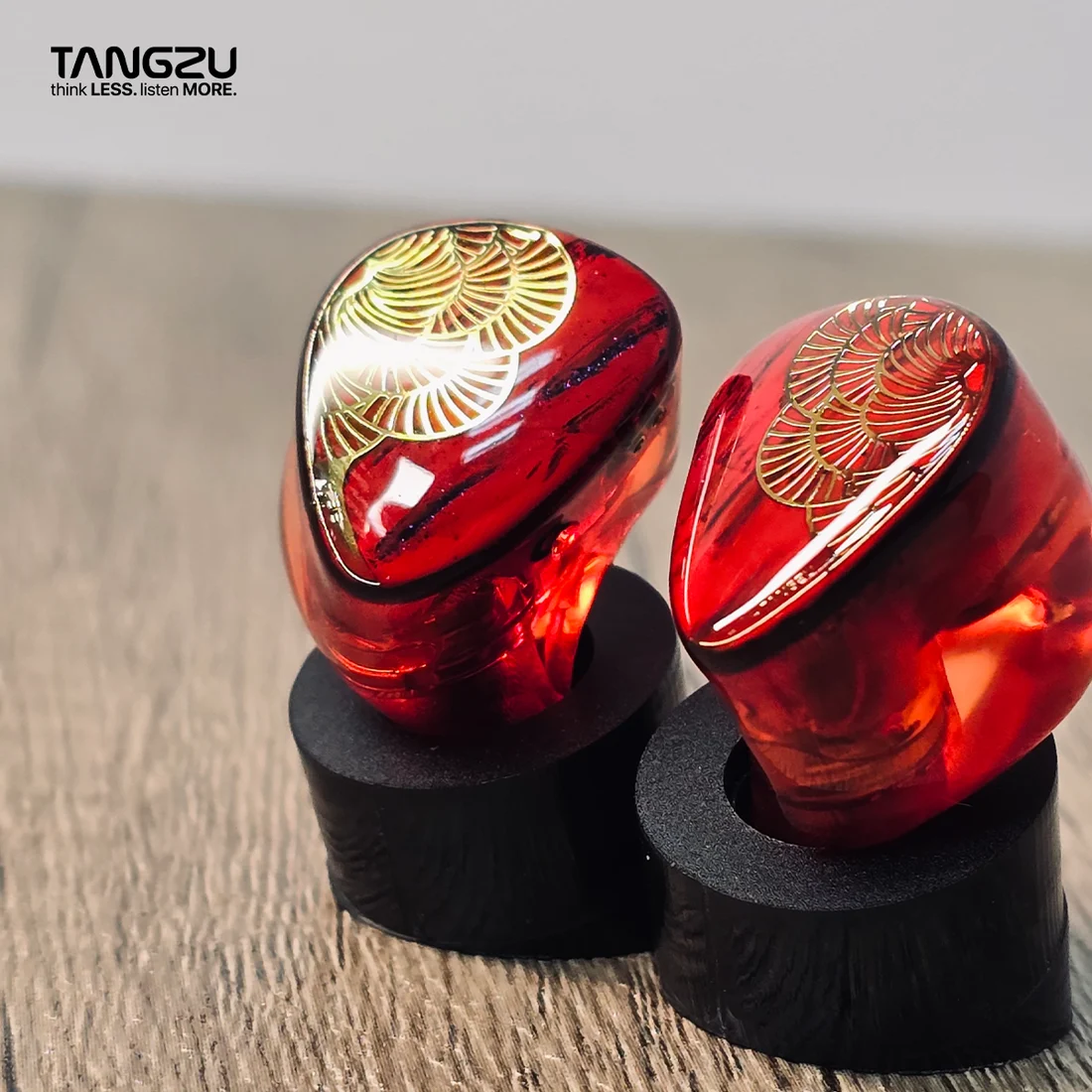
The Tangzu Xuan NV is the kind of IEM that tells you what it is almost immediately. Not with a burst of exaggerated detail or a bass shelf designed to win a five-minute demo, but with a calmer kind of confidence. It sounds warm without becoming woolly, smooth without turning lifeless, and mature in a market that too often rewards whatever feels most dramatic on first listen.
That is also why the Xuan NV feels more interesting than its crowded price bracket might suggest. At around $79 at launch, and sometimes discounted lower through Tangzu's own store, it lands in one of the most competitive stretches of the IEM market. There are brighter, sharper, more overtly technical options all around it. Tangzu's answer is not to beat those sets at their own game. Instead, it offers a beautifully styled dual-dynamic earphone aimed at listeners who care as much about comfort, timbre, and long-session listenability as they do about raw detail.
This is a comfort-and-coherence IEM, not a spec-sheet showoff
The most credible way to approach the Xuan NV is to stop asking whether it is the most technical under-$100 set and start asking whether it delivers a more satisfying daily listen than the sharper alternatives around it. That is where it becomes compelling. This is a dual-dynamic collaboration between Tangzu and HBB, using a 10mm ceramic driver and an 8mm PU plus LCP dynamic driver, housed in a medical-grade resin shell with 0.78mm two-pin connectivity. The raw ingredients are solid. The tuning choices are what make it distinctive.
Design and fit are part of the appeal, not an afterthought
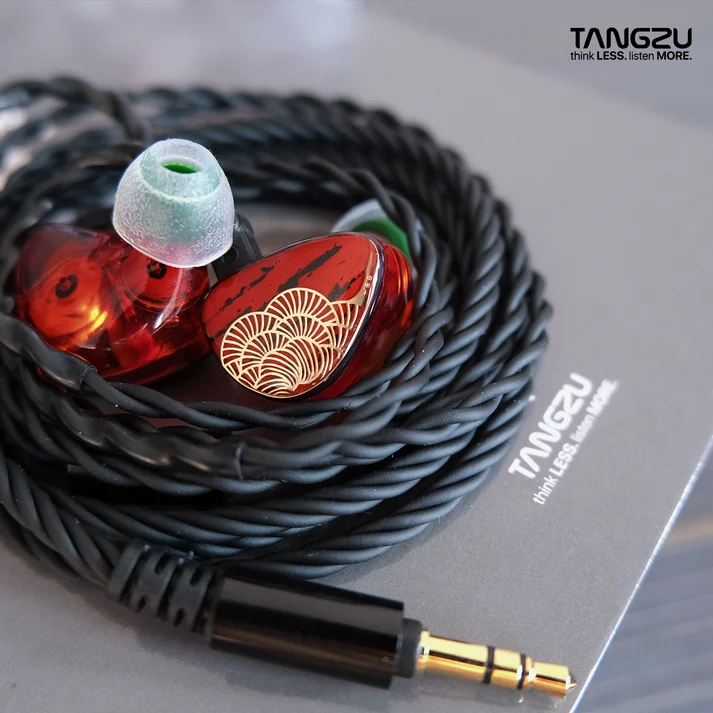
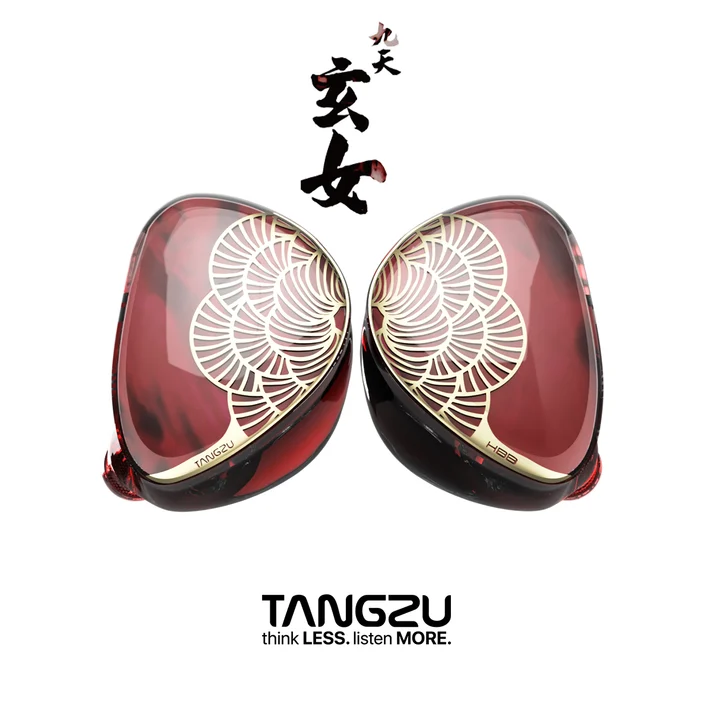
Tangzu has become very good at making affordable IEMs feel more characterful than generic, and the Xuan NV might be one of the clearest examples. The translucent red shells, gold butterfly-style faceplate accents, and visible internal architecture give it a look that feels ornate without crossing into costume jewelry. It stands out, but it does not look cheap. In a category full of conservative metal shells and interchangeable resin blobs, that matters more than many brands seem to realize.
The included accessory set is sensible rather than extravagant. Tangzu includes its own Tang Sancai ear tips, a soft carrying pouch, and a detachable single-crystal oxygen-free copper cable. The tips are a real plus. The cable, less so. The stock cable is the one weak point: usable, but not especially premium, with a rubbery feel that does not quite match the elegance of the shells themselves.
Fit is good for most listeners, though the shell is not tiny. The housing is slightly chunky but still comfortable, which is about right for an IEM designed around dual dynamic drivers in a lightweight resin body. If your ears are especially small, you may need to experiment with tips and seating. Otherwise, the Xuan NV is built for exactly the kind of extended wear its tuning encourages.
How the Xuan NV actually sounds
The short version is warm, smooth, and gently U-shaped. The more useful version is that the Xuan NV is tuned to keep you listening, not to keep impressing you every thirty seconds. There is a sub-bass foundation here, but it is not the sort of heavy-handed low end that defines some HBB collaborations. If anything, the surprise is how restrained it is. The bass gives music shape and softness more than brute impact.
Low frequencies have decent rumble and enough body to keep modern pop, electronic music, and hip-hop from sounding skeletal, but the Xuan NV is not especially punchy or fast. The bass is clean and well controlled, though the mid-bass lacks slam and the sub-bass can blur slightly under pressure. This is not sloppy bass, but it is rounded bass. It favors warmth and ease over attack and precision.
The midrange is where the Xuan NV earns most of its goodwill. Vocals and instruments sound natural, well weighted, and refreshingly free of the plasticky sheen that can make budget sets feel synthetic. Male vocals benefit especially from the low-end warmth, but female vocals also come through with a pleasing smoothness so long as the recording itself is not already hot in the upper mids. The Xuan NV's gift is not extreme clarity. It is tonal believability.
Treble is deliberately polite. For treble-sensitive listeners, that is a strength. There is little sense of glare, sibilance is generally kept in check, and cymbals or consonants do not jump out in an artificial way. The downside is equally obvious: there is less sparkle, less air, and less fine-edge definition than many listeners now expect from strong sub-$100 performers. The Xuan NV would rather sound safe than sharp, and whether that feels wise or timid depends almost entirely on your taste.
Technicalities: good enough, rarely the point
The Xuan NV does not collapse into mush, but it also does not win many arguments on technical performance alone. Soundstage is decent to above average in width, with competent imaging and enough separation to avoid feeling cramped on ordinary material. Where it starts to lose ground is in micro-detail, layering, and composure during busy passages. When arrangements get dense, the Xuan NV is more likely to smooth over complexity than to unpack it.
That makes the core trade-off pretty simple. If you want forensic listening, there are stronger options nearby. If you want a set that makes average recordings, older masters, and long playlists easier to enjoy, the softer edge becomes part of its charm. The Xuan NV is less interested in spotlighting every microscopic event in the mix than in keeping the whole presentation coherent and fatigue-free.
Source pairing matters more than the price implies
The Xuan NV can be fussier than its budget price suggests. Officially, it is rated at 8.5 ohms and 98dB sensitivity. In practice, it benefits from a competent source and behaves best with low output impedance. It will play from a basic dongle, but it is not the kind of IEM that sounds identical from everything. Give it a cleaner, more capable source, and it settles down in a useful way.
That does not mean you need a desktop stack to enjoy it. It does mean the Xuan NV is not the most foolproof blind buy for someone planning to run it from the weakest phone or adapter they own. For a collaboration that leans on refinement rather than excitement, source quality matters because small shifts in control and balance are easier to hear.
Who should actually buy it
The Tangzu Xuan NV makes the strongest case for itself with listeners who already know they do not want a bright, ultra-analytical tuning. If you want natural timbre, smooth upper frequencies, comfortable long sessions, and an IEM that looks more expensive than it is, this set makes real sense. It also works well as a complement to something more clinical. A listener who already owns a sharper set may find the Xuan NV a much easier choice than someone shopping for a single do-everything technical benchmark.
If, however, you are chasing the best detail retrieval, the crispest treble extension, or the cleanest separation available under $100, the Xuan NV is harder to recommend as a first pick. Competing sets from Simgot, Kefine, and Truthear push harder in those areas. Tangzu's counterargument is that many of those sets are less forgiving, less visually distinctive, and less relaxing over time. That is a fair argument. It is just a different one.
Verdict
The Tangzu Xuan NV is not the most explosive, technical, or obviously competitive IEM in its class. What it is, instead, is a very self-aware one. It knows that many people are tired of gear that sounds impressive before it sounds enjoyable. It knows that a good fit and a handsome shell still matter. And it knows there is still an audience for an IEM that prioritizes timbre, smoothness, and coherence over hi-fi fireworks.
That makes the Xuan NV easy to respect and, for the right listener, easy to love. It is not the universal answer in the under-$100 bracket. It is a more specific answer than that: a beautiful, relaxed dual-dynamic IEM for people who want to listen longer, not harder. On its own terms, that is a convincing review in its favor.
If your library leans toward vocals, acoustic music, older recordings, softer pop, and any kind of listening that values ease over edge, the Xuan NV deserves a serious look. If you want sparkle, incisiveness, and technical drama first, keep moving. Tangzu picked its lane carefully here. The good news is that it mostly stays in it.