The Penon Archangel does not arrive as a polite all-rounder. It arrives looking like a statement piece: a $799 collaboration between Penon and Effect Audio, built around a 2DD + 4BA + 2 bone-conduction-driver configuration, shipped with the Cadmus II cable, and fitted with dual tuning switches that let you nudge both bass and treble. In a market crowded with careful, reference-leaning kilobuck contenders, that alone gives it an identity.
What makes the Archangel interesting, though, is not simply that it is expensive or feature-rich. It is that its character is unusually clear: this is a large-sounding, bass-confident, warm-to-W-shaped IEM that prioritizes physicality, staging, and musical involvement over sterile precision. That usually means tradeoffs. The real question is whether the Archangel makes the right ones.
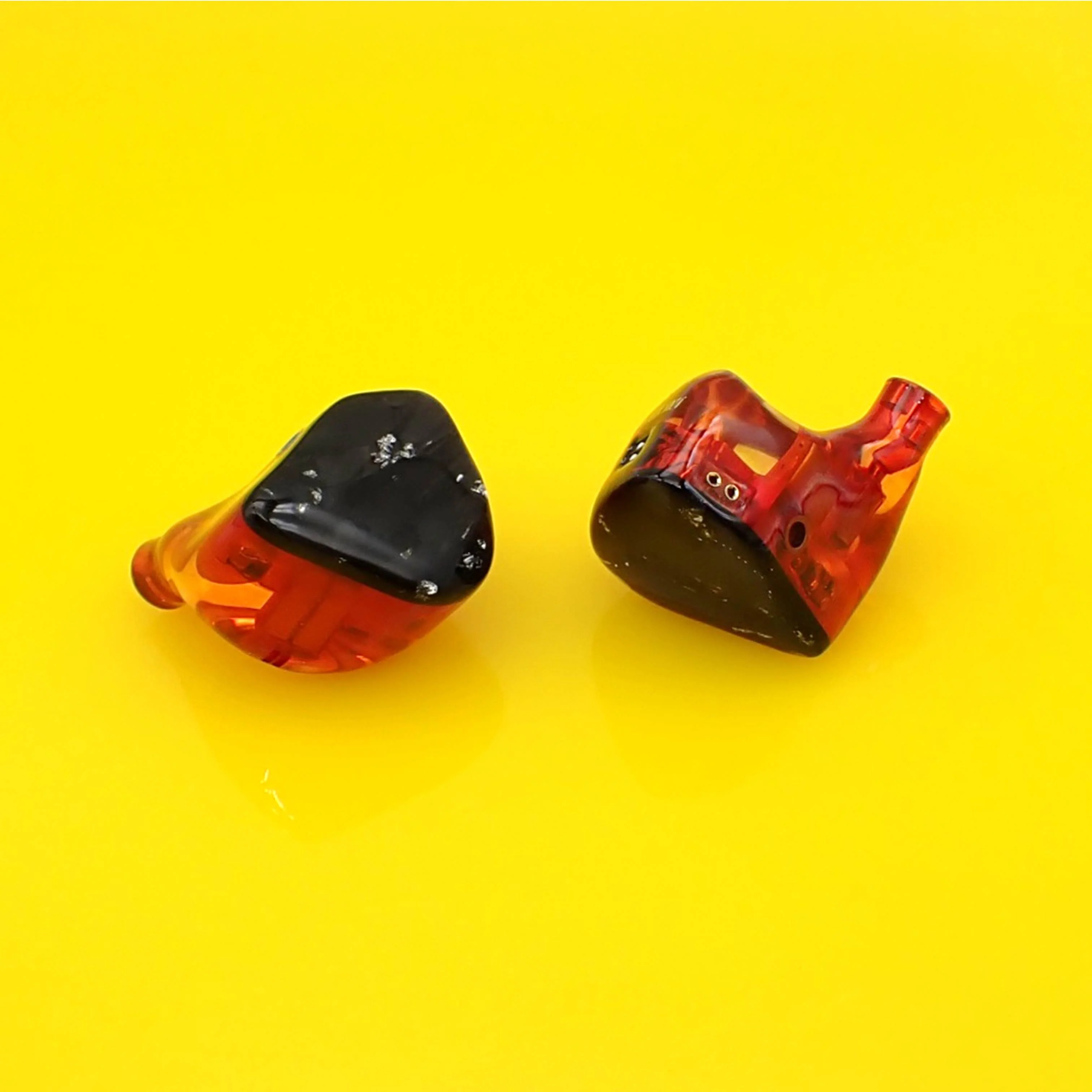
The pitch is easy to understand: big sound, premium package, real tuning flexibility
On paper, the Archangel reads like Penon trying to make a complete enthusiast package rather than just another driver-count flex. The shell uses two coaxial 8 mm dynamic drivers for the low end, four balanced armatures for mids and highs, and two Sonion bone-conduction drivers covering the full range. The included Effect Audio Cadmus II cable is not filler either; Penon leans on it as part of the product’s value proposition, and it is a genuinely premium stock pairing rather than something you immediately want to replace.
The two-switch system matters just as much. Switch 1 boosts bass. Switch 2 boosts treble. That sounds simple, but the four combinations feel distinct instead of gimmicky. That alone gives the Archangel a practical advantage over many fixed-tuning rivals at the same price. You are not locked into one mood. You can push it warmer and heavier, cleaner and brighter, or land somewhere in between depending on genre, source, and taste.
Build, fit, and accessories look more serious than the usual luxury posturing
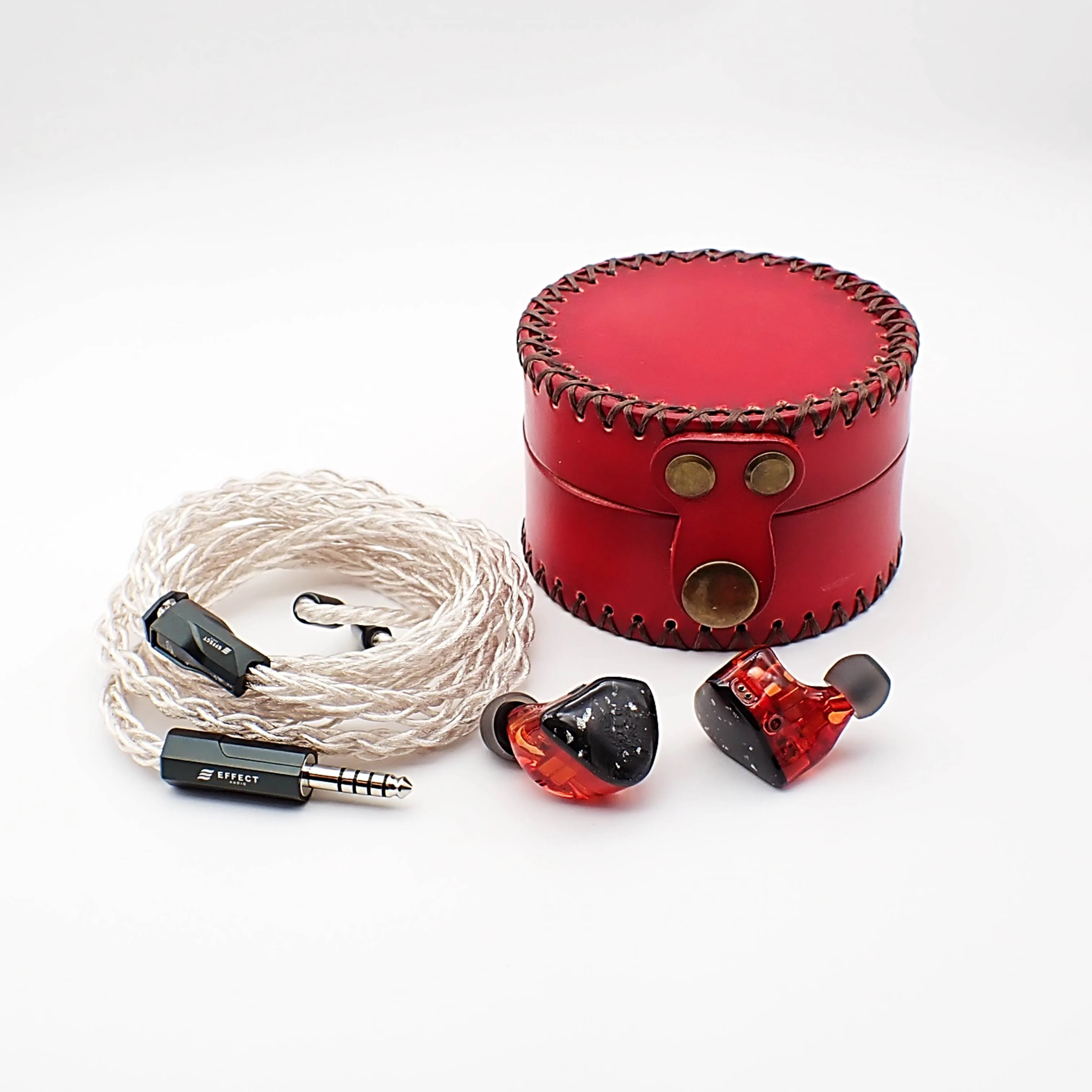
A lot of high-end IEMs talk about craftsmanship while still arriving with forgettable accessories or a cable that feels chosen by spreadsheet. The Archangel is more deliberate. Official materials confirm the Cadmus II 4.4 mm cable, leather case, cleaning brush, and tuning tool in the box, and the cable and case are standout inclusions. That matters because at $799, value is no longer about driver count alone. Buyers want to feel like they are getting a finished product, not a platform for more spending.
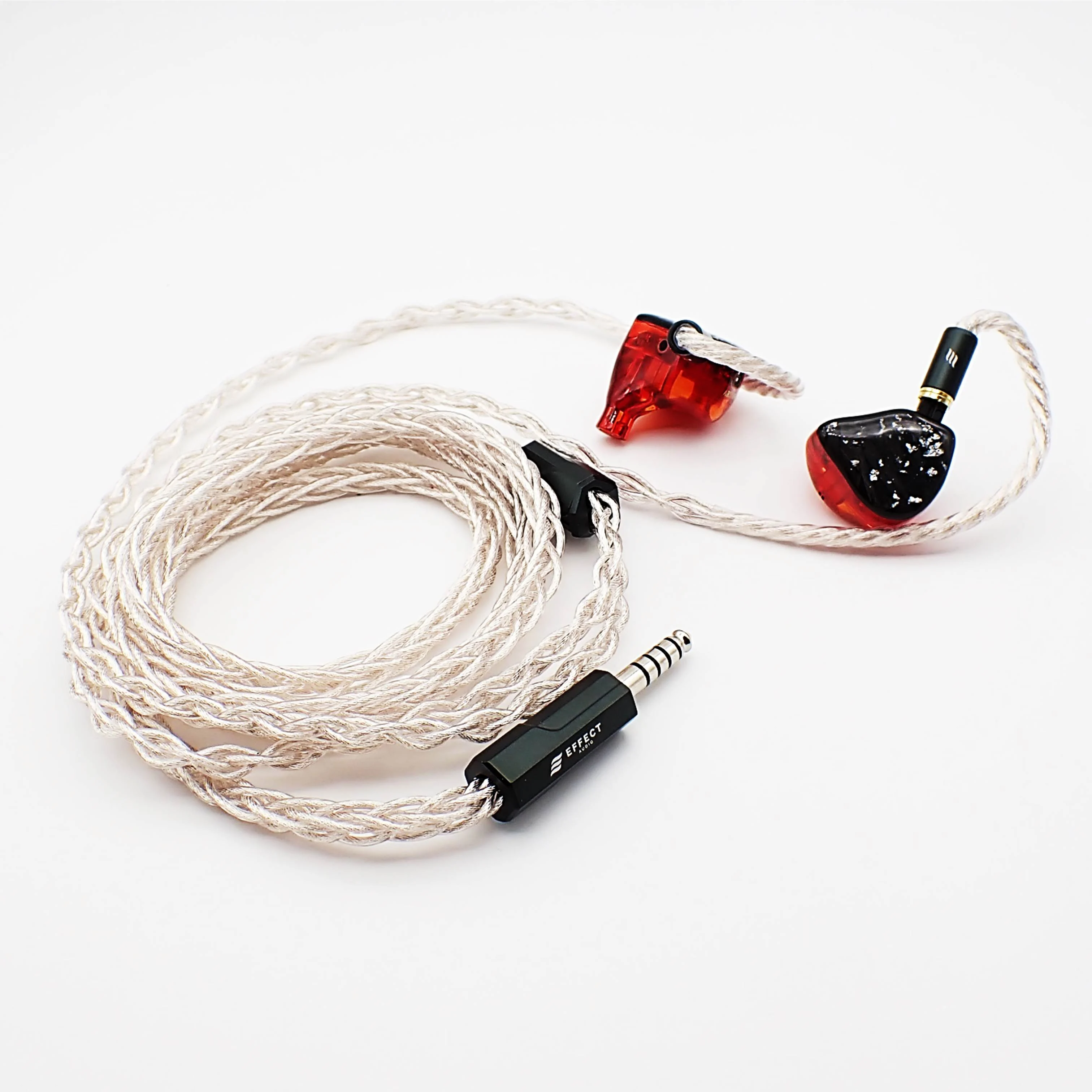
There is a catch, and it is an important one. The Archangel is physically large. It takes some adjustment, and smaller ears should treat fit as a real consideration rather than a footnote. It is also unusually open, or leaky, for an IEM, which some listeners may love for the airy, speaker-like effect and others may find awkward in quiet public spaces. In other words, this is not a discreet commuter set pretending to be one.
How it sounds: the Archangel’s personality is built around bass weight and space
If there is one trait that defines the Archangel, it is low-end physicality. This is not timid bass. It digs deep, carries real sub-bass authority, and gives music a sense of size and pressure that many technically cleaner sets do not. What stands out is not quantity alone, but tactility. The Archangel is built to make kick drums, synth drops, cinematic scores, and bass guitars feel substantial rather than merely audible.
That bass emphasis does not mean a sloppy tuning, but it does tell you where Penon’s priorities are. This is not a lean, studio-monitor kind of presentation. Mid-bass punch can be less sharp than the sheer sub-bass presence suggests, and the set favors macrodynamic impact over forensic microdetail. That sounds like criticism until you ask what the product is trying to do. For listeners who want music to feel broad, immersive, and emotionally loaded, those are often acceptable compromises.
The mids and treble aim for richness and control, not a spotlight effect
The midrange is where the Archangel separates itself from basshead caricature. Vocals stay natural, smooth, and reasonably full-bodied, with enough warmth to sound inviting without turning murky. Penon handles note density and timbre well here, especially on male vocals and instruments that benefit from body. The caveat is that listeners chasing a very forward, razor-lit vocal presentation may find the mids a little too relaxed relative to the bass foundation.
Treble follows the same logic. The Archangel is not chasing EST-style sparkle wars. Instead, it offers a clear, energetic, but generally controlled top end that helps keep the tuning from becoming sleepy. The treble is refined, crisp, and non-fatiguing. It is not dull, though it holds back some bite, edge definition, and upper-end excitement. That distinction matters. The Archangel is not missing treble so much as choosing restraint over showmanship.
The real differentiator may be the switch system
What keeps the Archangel from sounding one-note is the switch implementation. The bass switch can push it into more indulgent territory, while the treble switch can add edge, openness, and a little more bite to the upper range. Each setting makes a case for being the favorite, which is exactly what you want from tuning switches. If everyone prefers the same position, the rest are usually decoration. Here, the settings meaningfully reshape the balance from warmer and denser to brighter and more incisive.
That versatility strengthens the Archangel’s case as an enthusiast set rather than a novelty. A listener who mainly wants thick, cinematic low-end can get there. A listener who wants a bit more top-end cut for rock, metal, or brighter pop can get closer to that too. No switch system turns one IEM into four completely different products, but the Archangel gets closer than most.
Who should buy it, and who should skip it
The Penon Archangel makes the most sense for the listener who wants a premium, emotionally charged IEM under the four-figure line: someone who values slam, body, stage size, and the ability to tune the presentation to taste. If your library leans into electronic music, modern pop, cinematic scores, rock, or anything that benefits from physical low-end and a sense of scale, the Archangel is very easy to understand.
It makes less sense for people who want compact shells, strict neutrality, or that ultra-explicit, microscope-on-the-mix style of detail retrieval. If you care most about pinpoint reference tonality, maximum vocal intimacy, or a light, airy fit, there are safer options in this price band. The Archangel is not interested in sounding safe.
Verdict
The strongest case for the Penon Archangel is not that it does everything better than its rivals. It is that it knows what it wants to be. This is an IEM designed for people who still want excitement at $799: deep, physical bass; spacious, immersive presentation; natural enough mids to keep the tuning grounded; treble that stays lively without turning sharp; and switches that let the owner lean warmer or brighter without feeling like they bought the wrong version.
If that is your idea of high-end portable audio, the Archangel is one of Penon’s more compelling recent releases. If your priorities are smaller shells and stricter neutrality, it is probably not for you. Either way, it does something increasingly rare in crowded IEM pricing tiers: it has a personality, and that personality sounds intentional rather than accidental.