The FiiO BTR17 makes sense the moment you stop thinking about it as just another Bluetooth dongle. On paper, it looks like a familiar audiophile checklist product: newer Qualcomm silicon, dual ESS DACs, THX amplification, LDAC and aptX Lossless support, balanced output, app-based EQ, more power than the last one. The category is full of devices that sound impressive in a comparison table. Far fewer of them feel genuinely well judged in daily use.
That is the BTR17’s real trick. It is not simply trying to be the most decorated portable DAC/amp under $200. It is trying to collapse three jobs into one device: a good Bluetooth receiver for wired IEMs, a competent USB DAC/amp for a phone or laptop, and a surprisingly capable desk companion when you feed its dedicated power input and switch on Desktop Mode. In practice, that makes it more interesting than its spec sheet alone suggests.
Who the BTR17 is really for
The smartest audience for the BTR17 is not the person chasing the tiniest wireless clip-on, and it is not the person building a serious desktop stack. It is the listener who owns a few good wired IEMs or headphones and wants one source device that can move between a commute, a coffee shop, and a desk without feeling like a compromise everywhere. If that is your use case, the BTR17 lands with unusual precision.
FiiO’s official feature set backs up that ambition. The BTR17 uses Qualcomm’s QCC5181 platform with Bluetooth 5.4, supports LDAC and aptX-family codecs including aptX Lossless, runs dual ES9069Q DACs, uses an XMOS XU316 USB stage for high-resolution wired decoding, and adds a dedicated Desktop Mode with separate power input. Officially, balanced output reaches up to 650mW + 650mW into 32 ohms in Desktop Mode, while portable balanced output is rated at 300mW + 300mW. Those numbers matter less as bragging rights than as a clue to the product’s intent: this is not only for efficient IEMs.
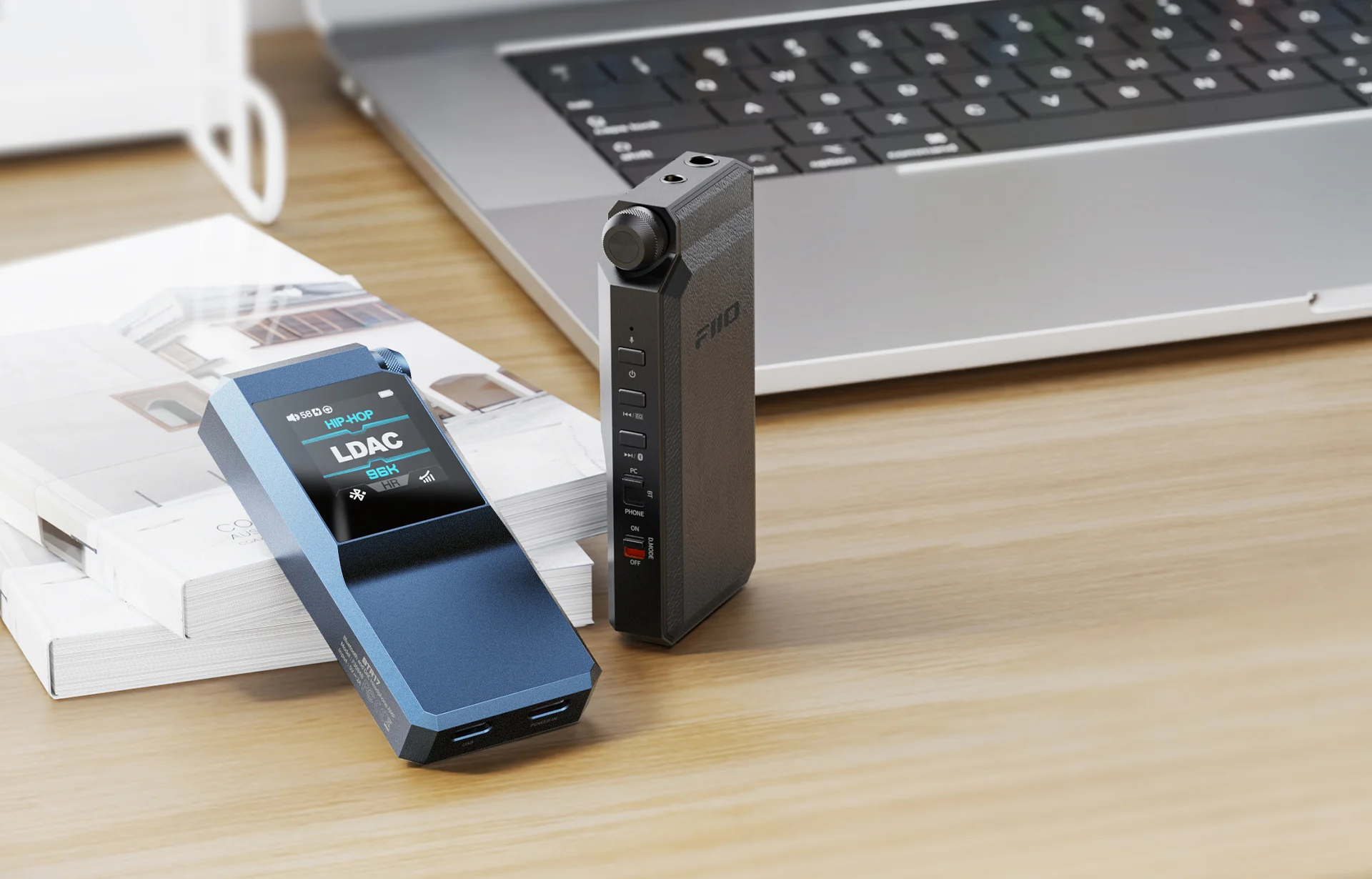
A portable DAC that finally respects sound quality
A lot of compact Bluetooth DAC/amps still ask you to pick your compromise in advance. Some are wonderfully portable but run out of steam with full-size headphones. Others sound strong wired but feel clumsy once you actually clip them to a shirt, stack them to a phone, or try to navigate them one-handed. The BTR17’s best quality is that it was designed by people who understand the category’s friction points rather than merely its marketing language.
That starts with the hardware layout: the new control scheme and the larger 1.3-inch color display bring practical gains. The stepped volume crown and the physical switching are improved, and keeping the controls on one side makes one-hand use make more sense than it first appears. The knob and menus are easy to use, and the unit remains genuinely pocketable despite offering more features than most rivals in its price band.
That matters because ergonomics are often where portable audio gear quietly fails. A product can decode every format under the sun and still become annoying after three days if the interface is bad. The BTR17 avoids that trap.
How it sounds, and why the wired-versus-wireless gap matters
The BTR17’s tuning is not soft, syrupy, or romantically colored. It is clean, lively, detailed, and a little energetic up top, with enough body and punch to avoid sounding sterile. It is neutral, vivid, and crisp, with strong detail and a black background, especially over USB and in Desktop Mode. The presentation is dynamic and slightly warm, with stronger resolution and better treble refinement than the BTR15 and BTR7. The sound is engaging and clean across the board.
That character fits the BTR17’s actual role. This device does not need to win a fantasy contest against desktop gear at three times the price. It needs to sound credible enough wirelessly, then scale up meaningfully when used as a wired DAC/amp. It does. LDAC performance gets surprisingly close to wired playback, which is probably the most important real-world compliment the BTR17 can get. If wireless mode sounded like a consolation prize, the entire concept would weaken. Instead, the BTR17 preserves enough resolution and control over Bluetooth to make the wired jump feel like an upgrade rather than a rescue mission.
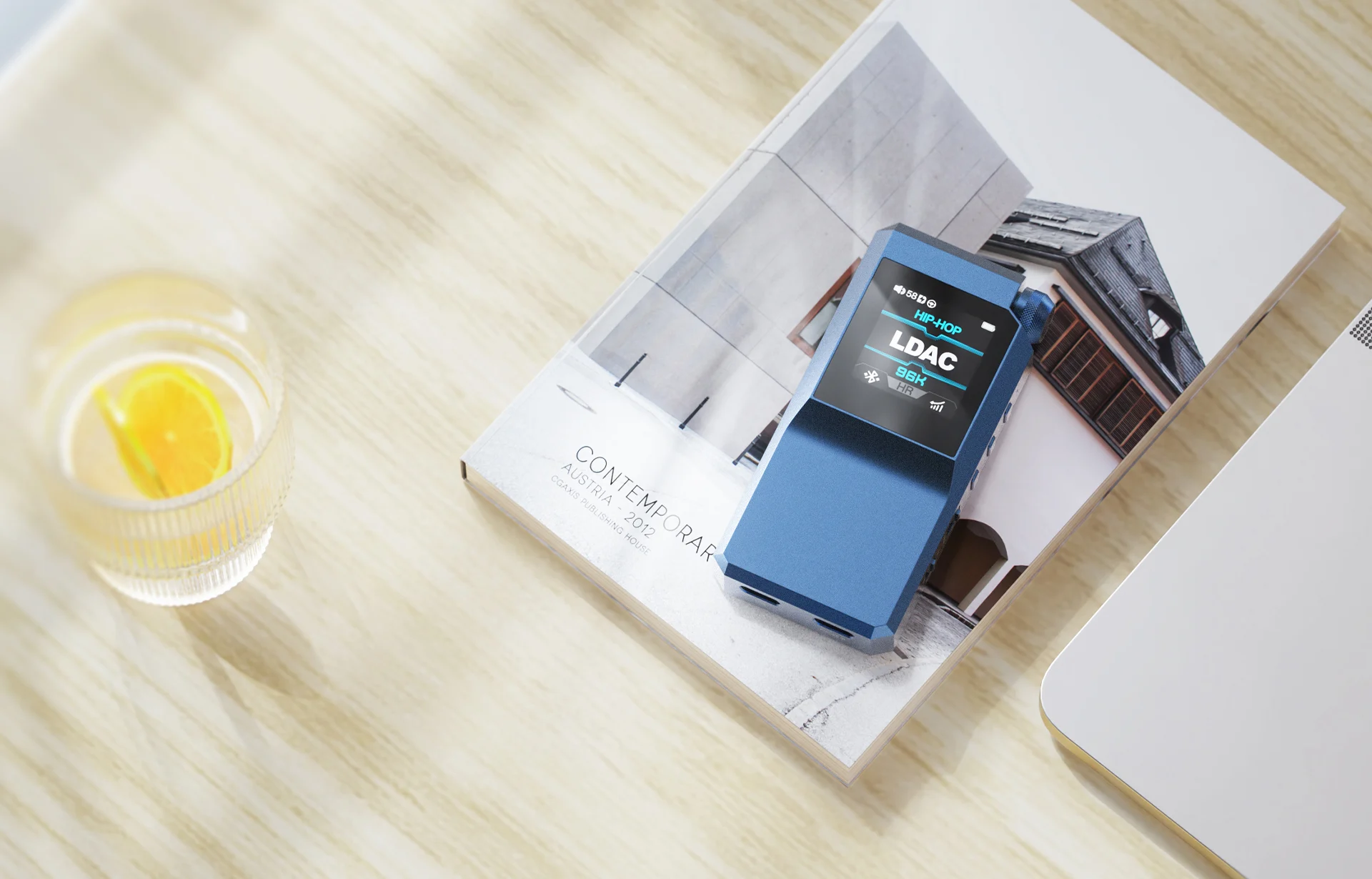
Desktop Mode is the feature that justifies the flagship pitch
The single most persuasive reason to care about the BTR17 over cheaper alternatives is Desktop Mode. FiiO’s implementation is not merely a menu trick. There is a dedicated switch and a separate USB-C power input, so the device can take external power without leaning entirely on your phone or laptop. In official specs, that is what unlocks the headline 650mW + 650mW balanced output at 32 ohms. In plain language, it means the BTR17 can stop behaving like a polite portable and start acting more like a serious small DAC/amp.
This does not mean it replaces a proper desktop setup for every headphone. It does mean the BTR17 clears a line that many portable devices never reach. It has real authority with more demanding full-size headphones, while still being usable with sensitive IEMs. That flexibility is the heart of the product. If you only use efficient in-ears, the BTR17 can feel excessive. If you own both IEMs and a couple of moderate full-size headphones, it starts to look very smart.
There is also a subtle philosophical advantage here. Desktop Mode acknowledges that portable listeners do not live in one listening scenario. A lot of people want one good source that can work in motion and then become the desk device when the day settles down. The BTR17 is one of the few products in its class built around that behavior instead of treating it as an afterthought.
PEQ, app support, and the modern source question
The other reason the BTR17 feels current is its attitude toward EQ. FiiO gives it a 10-band PEQ and web-based as well as app-based control, which may sound like a side feature until you remember how much personal audio has shifted toward source-side tuning. Source-level PEQ is one of the BTR17’s standout strengths. In 2026, a portable source that assumes listeners might want to reshape an IEM or headphone is not doing a gimmick. It is responding to the way people actually listen now.
This also helps explain the BTR17’s value. At roughly $200, it is competing not only with other Bluetooth DAC/amps, but with budget DAPs, wired dongles, and older favorites like the Qudelix 5K that remain compelling because of software strength. The BTR17 does not win by being the cheapest or the smallest. It wins by making a broader argument: that one well-equipped source with strong codec support, real power, usable hardware controls, and onboard EQ may now be a better buy than splitting your budget across multiple lesser devices.
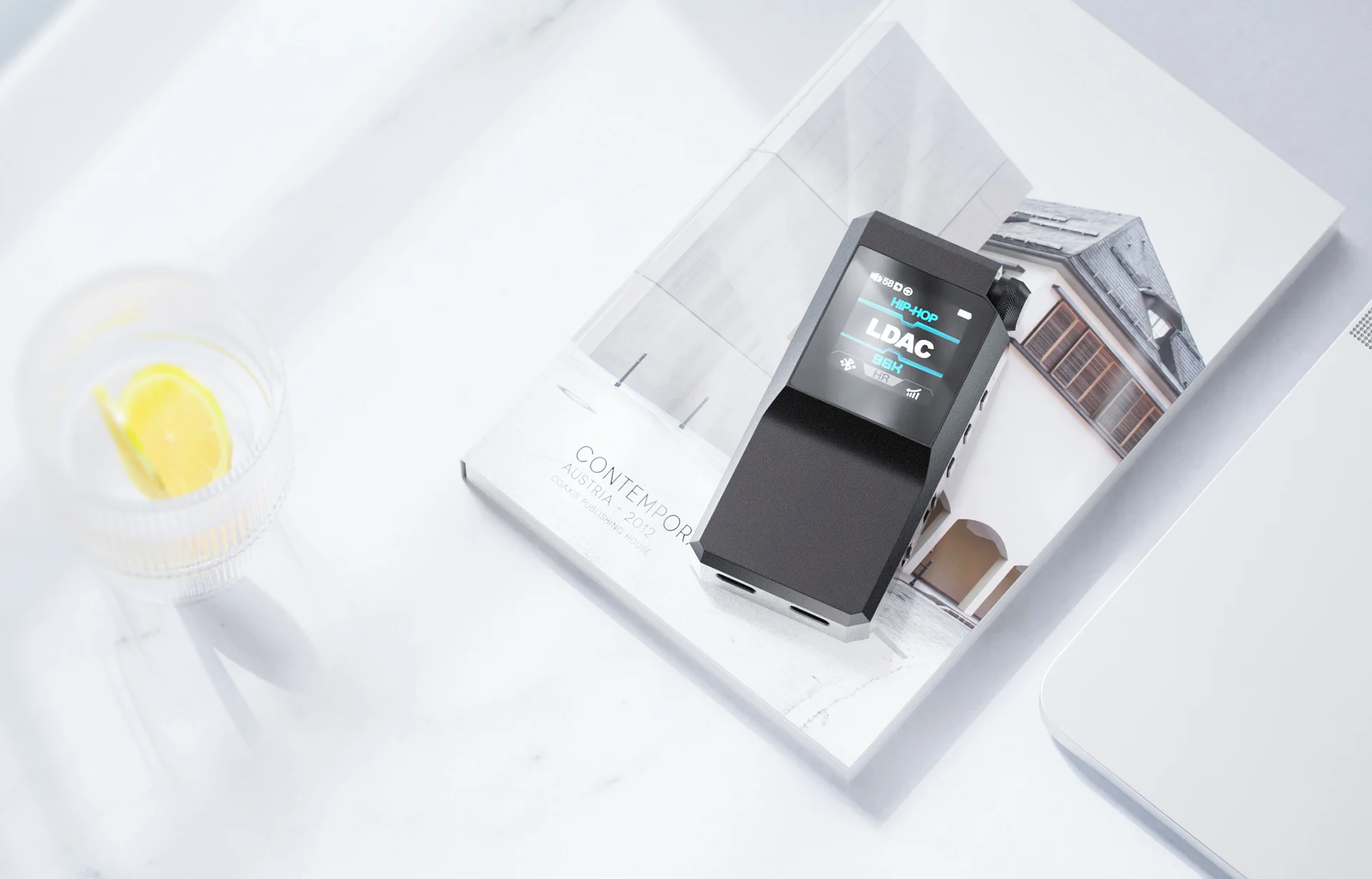
What keeps it from being an automatic recommendation
The case against the BTR17 is not hard to see. Battery life is only moderate, with FiiO quoting about eight hours under LDAC use, and real use lands in roughly the same zone. That is acceptable, not class-leading. It is also larger than the tiny clip-and-forget Bluetooth receivers some listeners prefer. And if your headphones are easy to drive and you mostly care about ultra-light travel, the BTR13, BTR15, or a simpler dongle may be the more rational choice.
There is one more point worth stating clearly: the BTR17 is a Bluetooth receiver, not a general-purpose Bluetooth transmitter for sending USB audio out to wireless earbuds. If you need that specific transmit-style behavior, this is the wrong tool. That limitation is not a flaw if you understand the category, but it is still something buyers should know before treating the BTR17 like an all-purpose wireless bridge.
Verdict
The FiiO BTR17 understands a real listening pattern: people who want better sound from wired headphones and IEMs without carrying separate devices for every situation. In that role, it is unusually complete. It sounds strong over Bluetooth, scales properly over USB, becomes legitimately useful at a desk in Desktop Mode, and adds modern EQ tools without making the interface miserable.
That does not make it universal. If you want the smallest thing possible, the cheapest thing possible, or the longest-lasting thing possible, there are better fits. But if you want one of the most convincing all-rounder Bluetooth DAC/amps in its price class, the BTR17 earns its flagship label the honest way: not by doing everything, but by doing the important jobs unusually well.